Kettlebell training
Three ways in: group classes, private instruction, or a workshop built around a specific subject.
Want to move explosively, build genuine strength, stay long and lean rather than bulky, keep energy through the day, and stop being managed by old injuries? That is what this training is for.
Three ways to train
Group classes
Open-level sessions with instructors trained in this lineage. The most economical way to learn the lifts properly and stay accountable.
See class locations →
Private training
One-on-one or semi-private for groups of four or fewer. Sessions run 45–55 minutes and are built around your exact level of experience.
How private sessions work →
Seminars & workshops
Specialist instruction for rehabilitation and prehabilitation, tactical personnel, and executive wellness programmes.
Workshop subjects →
What a session actually looks like
The structure is consistent whether you are in a group or training privately.
- Movement screen. Before load is added, an instructor looks at how you hinge, squat, and reach overhead. This determines what you will and will not do that day.
- Mobility and preparation. Targeted work on whatever the screen flagged — usually hips, thoracic spine, or shoulders.
- Skill work. The technical lifts — get-up, clean, press, snatch — performed fresh, while you can still hold form.
- Ballistic work. Swings and snatches for power and conditioning, usually in intervals.
- Restoration. Decompression and breathing to finish, so you leave in better shape than you arrived.
The order is deliberate. Skill before fatigue, ballistics after, restoration last.
Specialist instruction
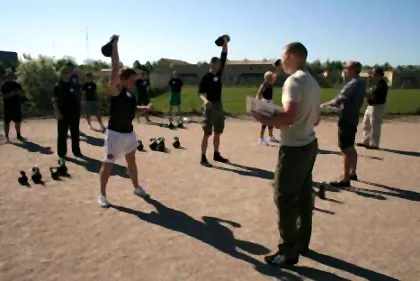
Beyond general training, Dr. Cheng has taught workshops built around particular subjects:
- Injury rehabilitation and prehabilitation — using kettlebell and bodyweight training to restore function rather than simply avoid aggravating it.
- Tactical populations — kettlebell and bodyweight methods for police, law enforcement, firefighters, first responders, and armed forces personnel.
- Executive wellness — short, sustainable programmes for people whose main constraint is time.
Kettlebells Los Angeles has always recognised the contributions and sacrifices made by police, fire, and armed forces personnel. Active duty members of those groups train at 50% off the regular price at any Kettlebells Los Angeles event.
Where instructors teach
Instructors trained in this lineage have taught across Southern California — West Los Angeles and Santa Monica, the South Bay, Orange County, and Riverside. Because instructors run their own schedules independently, the reliable way to find a current class is to contact the instructor nearest you directly.
See the full instructor roster, or browse by area: Los Angeles · Riverside County.
Training with an injury
This is the part that separates this lineage from general fitness instruction. Dr. Cheng came to kettlebells through his own lower back and shoulder rehabilitation, and holds credentials in Functional Movement Screen methodology alongside his clinical background in Chinese medicine orthopedics.
In practice that means an instructor here is more likely to remove a lift from your session than to coach you through discomfort. If you are carrying something, clear it with your physician first, then tell your instructor about it before the first session rather than after.
Training questions
How often should I train with kettlebells?
Two to three sessions a week is the usual starting point, which is enough to build the skill without accumulating more fatigue than you can recover from. Because sessions can be short, many people add brief solo practice on other days — a few sets of swings and get-ups — once technique is reliable.
Should I start with group classes or private training?
Private training is the faster route to correct technique because every repetition is watched, and it is the better choice if you are carrying an injury or feel self-conscious starting out. Group classes cost less and add accountability. A common pattern is a handful of private sessions to build the foundation, then group classes to maintain it.
What should I wear and bring?
Clothing you can hinge and squat in, and flat, thin-soled shoes or bare feet — running shoes with thick cushioned heels work against you in a deadlift or squat pattern. Bring water. Instructors generally supply the bells; ask when you book.
Do you offer instruction in languages other than English?
Yes. The instructor group has historically included instruction in English, Spanish, and Mandarin Chinese, as well as both male and female instructors with a range of backgrounds. Ask when contacting an individual instructor about their current availability.
Is there a discount for military, police, or firefighters?
Yes. Any active duty member of the police, fire, or armed forces trains at 50% off the regular price at any Kettlebells Los Angeles event. Mention it when you make contact.